Das makabre Tafelservice der Künstlerin Rona Kobel im Drawing Room Hamburg
von KARIN SCHULZE, Juni 2018, Szene Hamburg
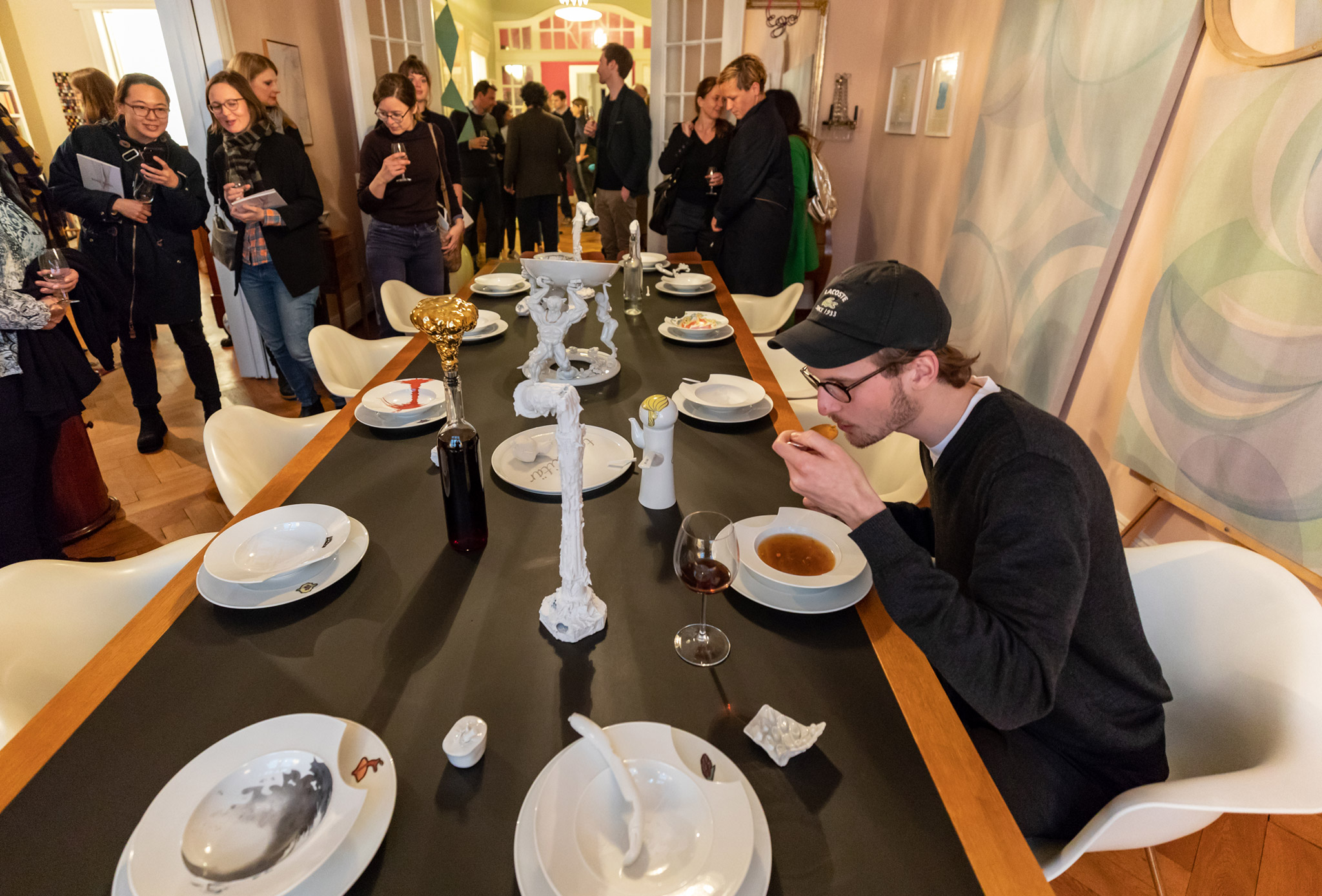
Löffelt man die Vorspeise aus, vielleicht ein schaumiges Erbsensüppchen, dann starrt einen vom Grund des Tellers das afghanische Lynchmordopfer Farkhunda an. Das Hauptgericht mundet von einem Teller, den nicht Goldrand oder Zwiebelmuster zieren, sondern Blüten, die „Judenkirsche“, „Zigeunerblume“ oder „Hottentottenfeige“ heißen. Zum Dessert wird mit der tortalitär-Platte Süßes angereicht. Und der Espresso fließt aus einer Kanne mit Tolle, die maisgelb ist wie Trumps Haarhaube.
Geschmacklos? Klar! Darum geht’s. Die Berliner Künstlerin Rona Kobel verdirbt uns kunstvoll den Appetit. Ihr Service, das in Zusammenarbeit mit der Manufaktur KPM entstand, verkehrt die harmlosen Motive herkömmlichen Essgeschirrs in das, worauf wir durch repräsentatives Tafelzeug gewöhnlich nicht gestoßen werden: auf Totalitarismus, Rassismus und die Krise der Demokratie.
Zu sehen ist Kobels Politporzellan in der vermutlich charmantesten Galerie Hamburgs. Der Drawing Room liegt im vierten Stock eines stilvollen Uhlenhorster Altbaus. Dort, in ihrer Wohnung, die sie mit alten Möbeln, junger Kunst und viel Geschmack eingerichtet haben, betreiben Esther Schulte und Alexander Sarailly eine eigensinnige Mischung aus Projektraum, Galerie und Salon.
Aktuell sind neben dem Service auch Kobels Aktualisierungen der Sagengestalt Europa so wie eine rätselhafte Installation von um Ausdruck ringenden Porzellanhänden zu sehen. Das gedankliche und handwerkliche Prunkstück der Schau aber ist der Tafelaufsatz.
Wo sonst Grazien oder Putten eine Obstschale hochhalten, sind jetzt heruntergekommene allegorische Figuren am Werk, die eigentlich die Säulen unserer Zivilisation sein sollten: Die Freiheit ist mit sich selbst beschäftigt. Sie hält die Schale nur halbherzig, während sie sich mit Mikroshorts und Rüschentop aufreizend reckt und für ein Selfie post. Die Gestalt der Gerechtigkeit ist ausgehöhlt und die Waage an ihrem Gürtel hängt bedenklich schief. Und der Kapitalismus trägt kein „menschliches Antlitz“, ist vielmehr Muskelmonster mit Wolfsfresse und trampelt Mensch wie Lorbeerkranz nieder.
Wer sich von diesem Personal die Früchte der Zivilisation kredenzen lässt, das macht Kobel wunderhübsch deutlich, sollte auf Maden, Schimmel und faule Stellen gefasst sein.
The macabre tableware by artist Rona Kobel at Drawing Room Hamburg
by KARIN SCHULZE, Juni 2018, Szene Hamburg
When you spoon out the starter, perhaps a frothy pea soup, the Afghan lynching victim Farkhunda stares at you from the bottom of the plate. The main course is served on a plate decorated not with gold rims or onion patterns, but with flowers called “Jew’s cherry,” “gypsy flower,” or “Hottentot fig.” For dessert, sweets are served on a tortalitarian platter. And the espresso flows from a pot with a crest that is corn yellow like Trump’s hair.
Tasteless? Of course! That’s the point. Berlin artist Rona Kobel artfully spoils our appetite. Her service, created in collaboration with the KPM manufactory, transforms the harmless motifs of conventional tableware into something we don’t usually encounter in representative tableware: totalitarianism, racism, and the crisis of democracy.
Kobel’s political porcelain is on display in what is probably Hamburg’s most charming gallery. The Drawing Room is located on the fourth floor of a stylish old building in Uhlenhorst. There, in their apartment, which they have furnished with old furniture, young art, and a great deal of taste, Esther Schulte and Alexander Sarailly run a unique mixture of project space, gallery, and salon.
In addition to the service, Kobel’s updates of the legendary figure Europa and an enigmatic installation of porcelain hands struggling for expression are currently on display. But the intellectual and artisanal showpiece of the exhibition is the table centerpiece.
Where graces or cherubs would normally hold up a fruit bowl, we now see dilapidated allegorical figures at work, figures that are supposed to be the pillars of our civilization: Liberty is preoccupied with herself. She holds the bowl half-heartedly while provocatively stretching in micro shorts and a ruffled top and posing for a selfie. The figure of Justice is hollowed out and the scales hanging from her belt are precariously crooked. And Capitalism does not have a “human face”; rather, it is a muscle monster with a wolf’s mouth, trampling people and laurel wreaths alike.
Kobel makes it wonderfully clear that anyone who allows this staff to serve them the fruits of civilization should be prepared for maggots, mold, and rotten spots.
Foto: Helge Mundt